
 The social media craze in China has claimed another casualty: Baidu Shuoba. The Twitter-like service, which had suspended new user sign-ups in May, announced they would completely shut down at the end of this month. Baidu was late to the game and didn’t bring anything new to the table.
Shuoba launched a year ago coinciding with Baidu’s surge in market share after Google left China. The search giant, seeking new areas ripe for domination, hired the CEO of Mayi.com, a social networking site that went bankrupt, as its head of social initiatives to propel the next phase of growth for the company. Despite its initial growth spurt, the popularity of the new microblog platform was short-lived and comparisons to Sina Weibo always put Shuoba at the disadvantage.
Shuoba required users’ real name, national ID number, and home address; Weibo did not. There was nothing elite about joining Shuoba; Weibo had the magnetic pull of celebrities and government officials. By the time Weibo opened its platform to allow games and its own currency, Shuoba appeared down for the count.
“I thought it’s nothing new from a product point of view when it launched,” remarked Gang Lu of Technode. Lillian Zhang of Darwin Marketing in Shanghai laconically observed, “This product is absolutely stupid.”
Baidu went back to the drawing board and in April Shuoba re-launched. The site boasted a new Plurk-like timeline and no longer required users to verify their identity. Instead Baidu asked for your phone number, yet strangely didn’t allow posts via SMS. Sina, on the other hand, made phone numbers optional and did allow posts via SMS.
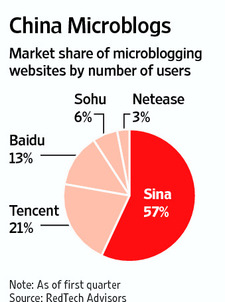
It was too little too late. By the time Shuoba got back into the race, Weibo was way ahead of the pack. Sina grabbed China’s most desirable demographic – the young and tech-savvy, with money to spend; found a way to get them to verify their real identities of their own volition by using “Expert” badges; and obtained the network effects that in total attracted over 200 million users, within earshot of Twitter. Baidu Shuoba stopped accepting new users in May, its head of social initiatives resigned in July, and the announcement yesterday of its demise should have come as no surprise.
While poor product management appears to be the culprit here, the costs of complying with government censorship should not be overlooked. The government counts on microblog providers to police the postings and expunge objectionable material that mechanical filtering does not block. Furthermore, since Baidu required verification of real identities, “each query costs Baidu 5 RMB and rumors are Baidu [Shuoba] had at most 5 million registered users,” estimates Bill Bishop of DigiCha. Maybe Sina did a better job and the government told Baidu to give up?
Baidu Shuoba now joins the fate of other fallen Chinese microblog platforms Digu, Zuosa and Fanfou.
Notwithstanding the rumors of a Baidu-Facebook partnership becoming true, Baidu failed no more than any other search engine company that attempted to crack social had failed in the past.

[...] companies could face many other financial costs tied to controlling information on their sites. Digital Due Diligence explains: “The government counts on microblog providers to police the postings and expunge [...]